Cyrcadia W19
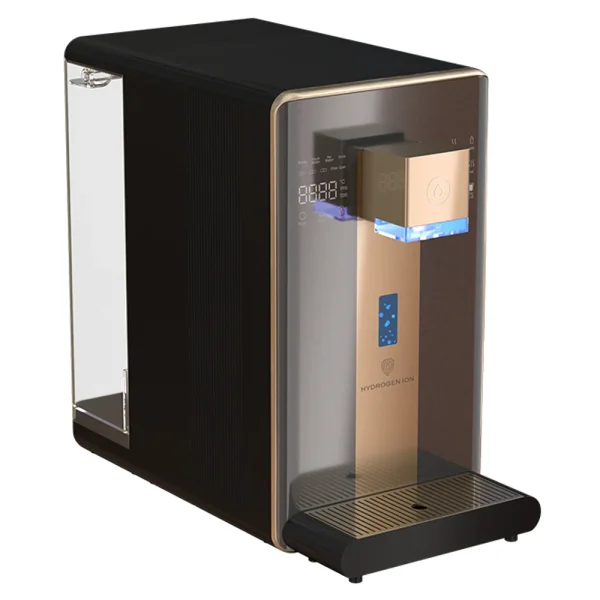
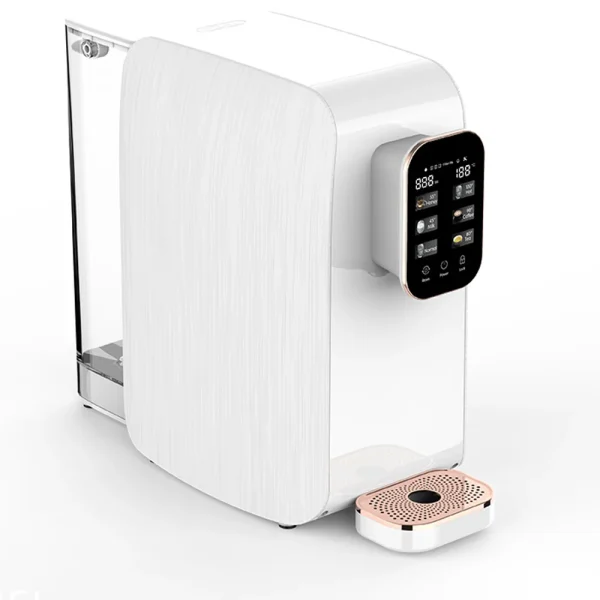
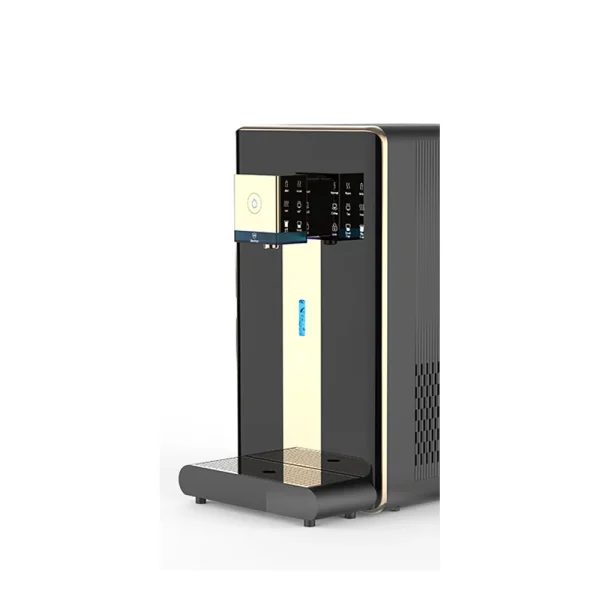
Premium dispenser, six temperatures. 6L raw water tank, 18L/h hot water, up to 700 litres a day, hydrogen-rich water.
Large-capacity RO for villas and offices. 1000GPD, hydrogen and alkaline water, 3-second heating, 6C chilled.
The W10 filters as you draw, rather than holding water in a tank first. Nothing stands for hours, and there is no tank to clean. In a busy house it also means the twentieth glass comes as fast as the first.
1,000 GPD is the membrane class this unit runs. Day to day that means a villa kitchen, a small office or a large household can lean on it all day without waiting for a tank to refill.
Water passes a composite pre-filter, the reverse osmosis membrane, then a final carbon stage. Together they hold back heavy metals, chlorine, sediment, nitrates, pharmaceutical and hormone residues, microplastics and bacteria, and give back water that tastes clean with no odour.
The unit stands on the counter and connects to the cold water line. Our technician installs it and hands it over ready to use, including the first water test.
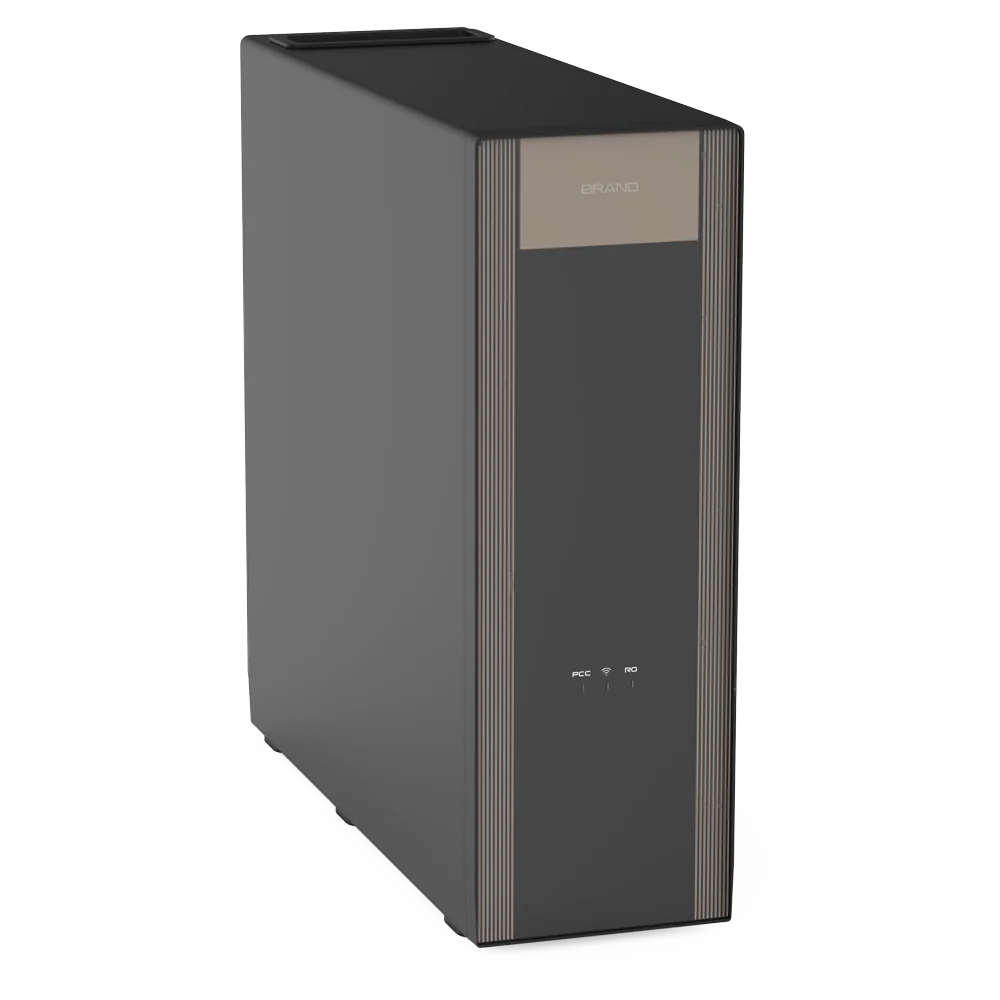
| Capacity | 1,000 GPD |
|---|---|
| System | Direct flow, no storage tank |
| Filtration | Multi-stage reverse osmosis |
| Water settings | Hydrogen and alkaline |
| Size | 45.7 × 14.8 × 43.7 cm |
| Hot water | Ready in 3 seconds |
| Chilled water | Down to 6 °C |
| Filter replacement | Every 6 to 12 months |
| Weight | 16 kg |
The manufacturer recommends replacement every 6 to 12 months, or every 2,000 litres of filtered water. The machine signals for itself once filter life drops below 20%. The reverse osmosis membrane lasts around twice as long as the other stages, so it is changed half as often.
In areas with harder or dirtier water some cartridges need changing sooner. Replacement takes seconds and needs no tools.
Split the plastic housing, empty the contents into household waste, then recycle the housing.
No. It is true that reverse osmosis also holds back some minerals, but the amount of mineral in tap water is very small to begin with and easily replaced through everyday food. What it holds back in far greater quantity is everything you do not want.
No filter removes 100% of fluoride. Reverse osmosis reduces it by roughly 85 to 97%, provided the incoming level is below 1.5 ppm (mg/l).
Reverse osmosis does not change pH directly. As soon as clean water meets air, carbon dioxide dissolves into it and the pH drifts down. You can measure that with a digital pH meter if the glass stands for a few minutes.
Bear in mind stomach acid sits at about pH 2.0, so the acidity of any water changes the moment it reaches your body. Our focus is on how clean the water is, not on its pH.
Yes. The first filter set is already fitted inside the unit. Fill the tank, plug it in, and it is ready.
One set replaces roughly 2,000 to 4,000 single-use plastic bottles.