Water Purifiers
Cyrcadia W19G
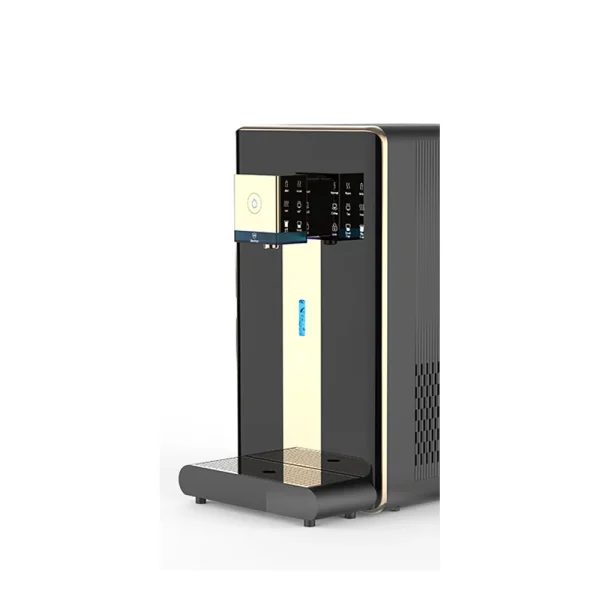
Plumbed in under the sink. Same water, unit out of sight.
Rp 12.900.000 12 monthly payments of Rp 1.075.000
Add
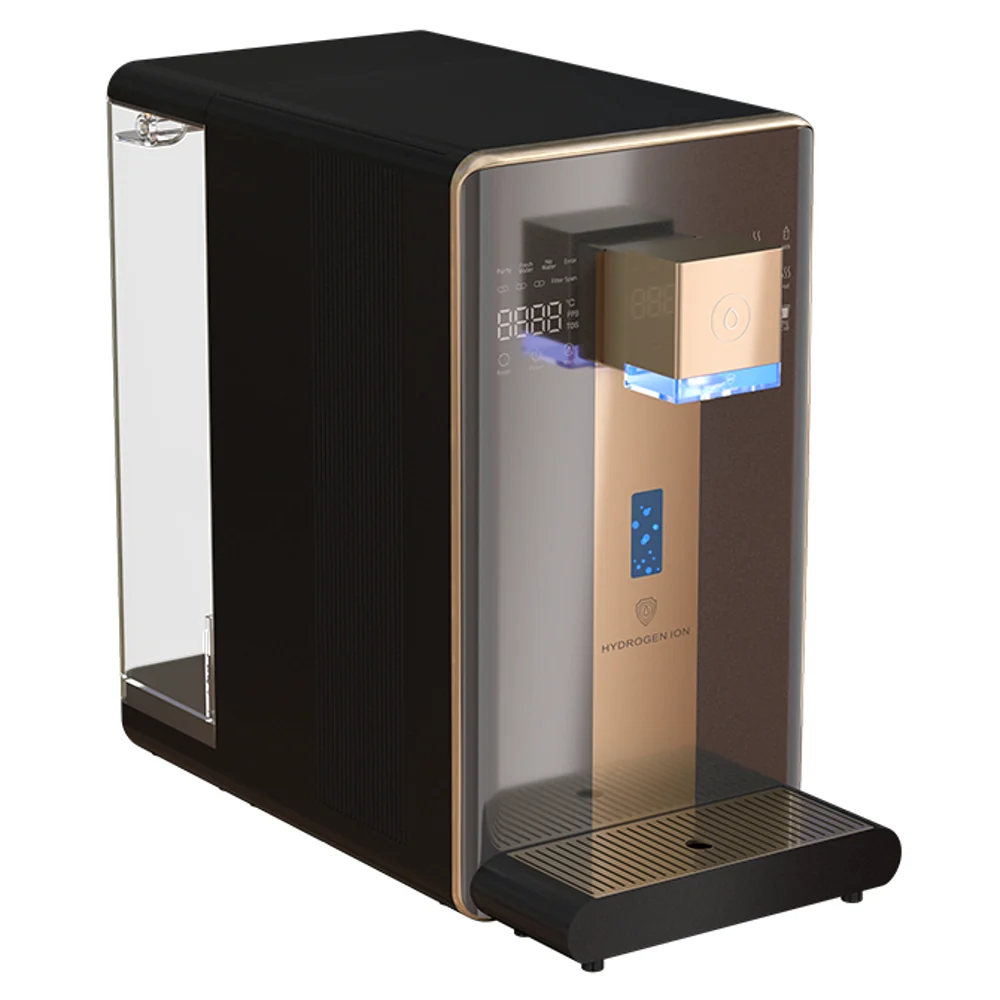
Premium dispenser, six temperatures. 6L raw water tank, 18L/h hot water, up to 700 litres a day, hydrogen-rich water.
The W19 filters and heats in one machine. Fill the tank, plug it in, and water arrives at the temperature you chose. No kitchen rebuild, no plumber.
The W19 is not only a purifier. It is also a kettle that hands you the temperature you want straight away.
Clean water tastes clean, but a clean taste does not prove the water is clean. That is where most filters stop. Reverse osmosis is a long-proven filtration technology, and it is what the W19 is built on.
One W19 filter set replaces roughly 2,000 to 4,000 single-use plastic bottles.
| Capacity | Up to 700 litres a day at 20 °C |
|---|---|
| Flow rate | 30 litres an hour |
| Hot water | 18 litres an hour above 90 °C |
| Rated throughput | 2,000 litres per filter set |
| Raw water tank | 6 litres |
| Clean water tank | 3 litres |
| Waste water tank | 2.5 litres |
| Inlet water temperature | 4 to 38 °C |
| Weight | 10.2 kg |
| Size | Height 43 cm Width 24 cm Depth 47.5 cm |
| Electrical | 220-240 V, 50 Hz |
| Total power | 2,200 W |
| Cooling power | 68 W |
| Consumption | 0.1 kWh per 24 hours |
| Filter replacement | Every 6 to 12 months |
The manufacturer recommends replacement every 6 to 12 months, or every 2,000 litres of filtered water. The machine signals for itself once filter life drops below 20%. The reverse osmosis membrane lasts around twice as long as the other stages, so it is changed half as often.
In areas with harder or dirtier water some cartridges need changing sooner. Replacement takes seconds and needs no tools.
Split the plastic housing, empty the contents into household waste, then recycle the housing.
No. It is true that reverse osmosis also holds back some minerals, but the amount of mineral in tap water is very small to begin with and easily replaced through everyday food. What it holds back in far greater quantity is everything you do not want.
No filter removes 100% of fluoride. Reverse osmosis reduces it by roughly 85 to 97%, provided the incoming level is below 1.5 ppm (mg/l).
Reverse osmosis does not change pH directly. As soon as clean water meets air, carbon dioxide dissolves into it and the pH drifts down. You can measure that with a digital pH meter if the glass stands for a few minutes.
Bear in mind stomach acid sits at about pH 2.0, so the acidity of any water changes the moment it reaches your body. Our focus is on how clean the water is, not on its pH.
Yes. The first filter set is already fitted inside the unit. Fill the tank, plug it in, and it is ready.
One set replaces roughly 2,000 to 4,000 single-use plastic bottles.
Plumbed in under the sink. Same water, unit out of sight.
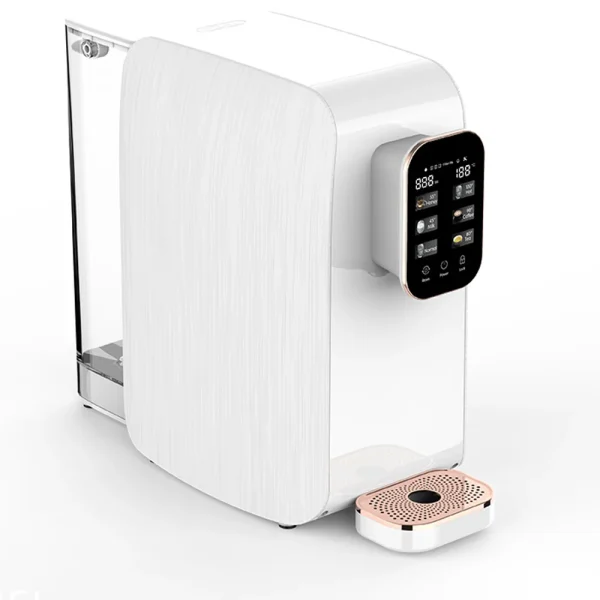
4L countertop RO: hot, cold and ambient. No installation, boiling water in 3 seconds.
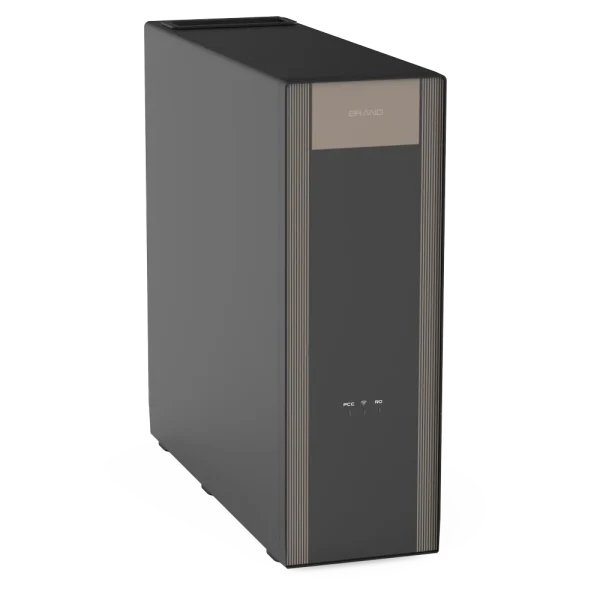
Large-capacity RO for villas and offices. 1000GPD, hydrogen and alkaline water, 3-second heating, 6C chilled.
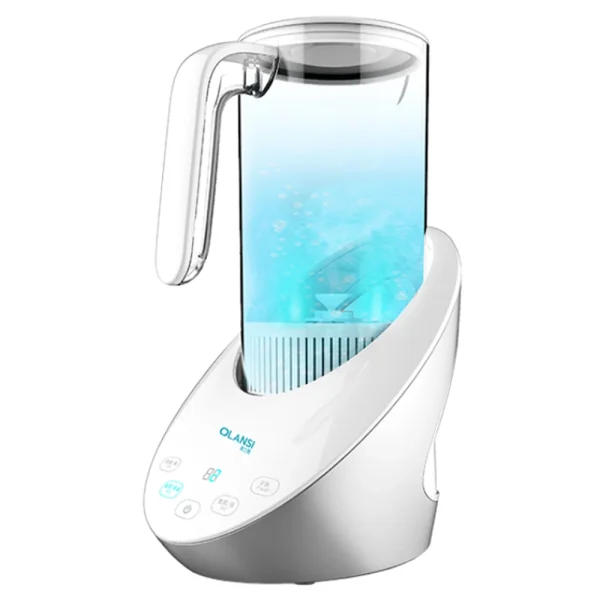
Hydrogen water maker, 1.5L carafe.